

By NXG Thrive
If you’re a Gen Z parent raising children in the digital age, you likely feel both the marvel and the worry that come with today’s technology. Smartphones, tablets, and social media are part of our kids’ everyday lives – yet many young parents wonder how all this screen time is affecting their children’s mental health and development. In Jonathan Haidt’s book The Anxious Generation, he shines a light on why today’s kids are more anxious and how childhood has been “rewired” by screens. Inspired by these insights (and speaking with the supportive voice of NXG Thrive), this article explores what The Anxious Generation means for parenting in the digital world – and offers friendly, actionable takeaways to help your family thrive.

The Great Rewiring of Childhood: Why Are Kids More Anxious Today?
It’s no secret that kids and teens are experiencing more anxiety and mental health challenges than a decade ago. In the early 2010s, after years of stable or improving trends, adolescent mental health took a nosedive: rates of depression, anxiety, self-harm, and even suicide sharply rose – in many cases more than doubling. This sudden spike in teen mental illness was seen across many countries, prompting experts like social psychologist Jonathan Haidt to ask why. Haidt’s research points to a major societal shift he calls “the great rewiring of childhood.” In plain terms, our kids’ daily lives and environments changed drastically with the rise of smartphones and social media, combined with changes in parenting styles and play.
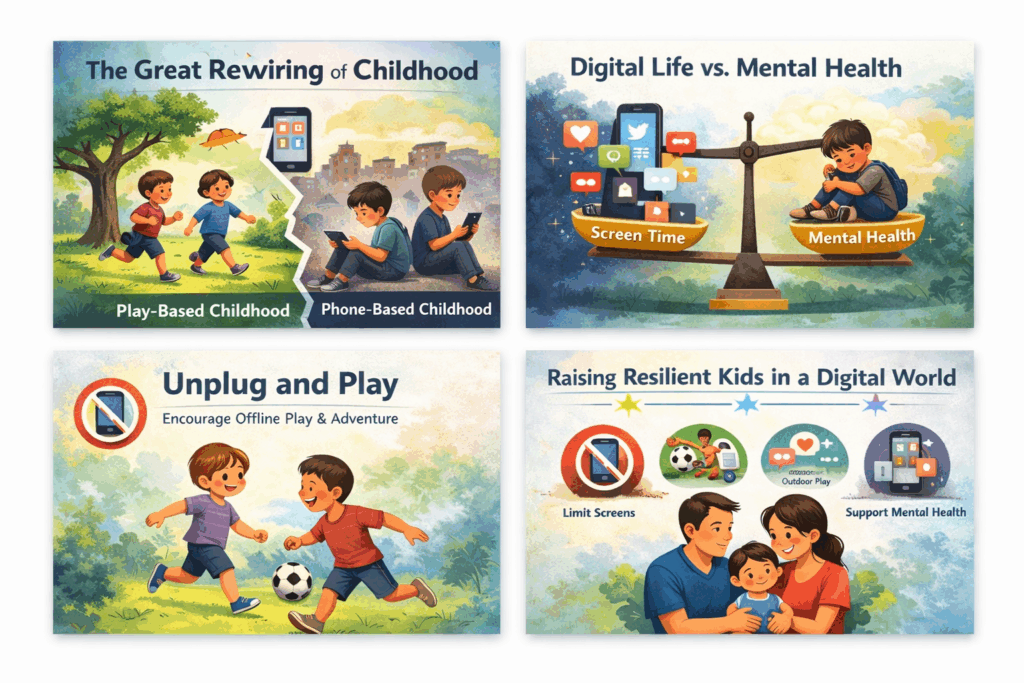
Haidt argues that today’s youth are the first to grow up fully in a “phone-based childhood,” which rapidly replaced the traditional “play-based childhood” many of us older parents remember. Throughout the 1980s and 1990s, children gradually had less freedom to roam, play outside, and take risks. By the early 2010s, ubiquitous screen access finally wiped out a lot of unstructured, real-world playtime. This digital childhood has “rewired” how kids grow up, interfering with healthy social and neurological development. Everything from sleep schedules and attention spans to face-to-face social skills have been affected by the lure of screens.
Importantly, The Anxious Generation notes that it’s not just the screens themselves at fault – it’s how we as a society responded to them. With the best of intentions, many Millennial and Gen X parents (and now older Gen Z parents) became more protective in the physical world even as digital worlds opened up without much supervision. Haidt and others observe an irony: we bubble-wrapped our kids in real life, yet handed them powerful devices that give access to the entire world. This combination of real-world overprotection and digital under-parenting means kids had fewer chances to build resilience through scraped knees and playground adventures, while they gained near-limitless access to online content and social media pressures at younger ages. It’s a perfect storm that can breed anxiety.
Screens and Mental Health: How Digital Life Impacts Kids
Modern childhood is saturated with screens, and not surprisingly, researchers are linking heavy screen use with various mental health risks. Today’s teenagers spend an average of six to eight hours per day on screens for leisure (outside of schoolwork). In one survey, about one-third of teens said they are on social media “almost constantly.” This massive increase in screen exposure has coincided with sharp spikes in teen anxiety, depression, and even issues like eating disorders and self-harm. Many young people also report plummeting self-esteem and increased feelings of isolation, despite being “connected” around the clock.
What’s going wrong? Haidt identifies several key harms of excessive screen time and social media that help explain these troubling trends:
- Less In-Person Socializing (Social Deprivation): Time spent scrolling is time not spent with friends and family in person. Since smartphones went mainstream around 2010, teens have been hanging out with friends far less – many report steep declines in face-to-face time and even fewer close friendships. All that isolation can lead to loneliness and weaker social skills.
- Sleep Disruption (Sleep Deprivation): Bright screens and endless feeds interfere with sleep. More teens are staying up late online and not getting the 8–10 hours of sleep they need. In fact, the number of students sleeping under 7 hours a night has increased significantly since 2010. Lack of sleep amplifies mood problems and anxiety, creating a vicious cycle.
- Fragmented Attention Spans: Social media and games are deliberately designed to grab attention with notifications, fast-paced videos, and infinite scroll. The result is constant interruption. It’s becoming harder for young minds to focus deeply on any one task. (Attention spans are like muscles – if we don’t exercise them with sustained focus, they don’t develop.) Many kids find schoolwork or reading boring compared to the instant hits of online content, which can hinder learning and critical thinking over time.
- Screen Addiction and Dopamine Hits: The digital world can be highly addictive. Apps, games, and videos offer a stream of quick dopamine hits, which some children (and adults!) have trouble putting down. Kids may struggle with compulsively checking for notifications or playing “just one more level,” to the point where it affects their mood and behavior. Parents might notice meltdowns when devices are taken away – a telltale sign of overreliance on screens.
- Social Comparison and Low Self-Esteem: Platforms like Instagram and TikTok bombard kids with highlights of others’ lives, unrealistic beauty standards, and filtered perfection. This fuels constant social comparison, which especially affects girls. Not surprisingly, rates of teen girls experiencing body image issues, anxiety, and depression have shot up in the social media age. Boys aren’t immune either, though their challenges often look different (for instance, some boys withdraw into video game worlds, impacting their academic performance and real-life social development).
The bottom line is that unrestrained screen time can crowd out the very experiences kids need for healthy growth. In Haidt’s words, a “phone-based childhood” comes with steep opportunity costs: kids get less sleep, less reading time, less outdoor play, less face-to-face interaction, and less independence. Over time, those missing pieces can make it harder for children to develop resilience, confidence, and strong mental health. As parents, understanding these risks is the first step. The next step is figuring out what we can do about it – how do we raise well-rounded, mentally healthy kids in a world full of screens?
Actionable Tips for Raising Children in the Digital Age
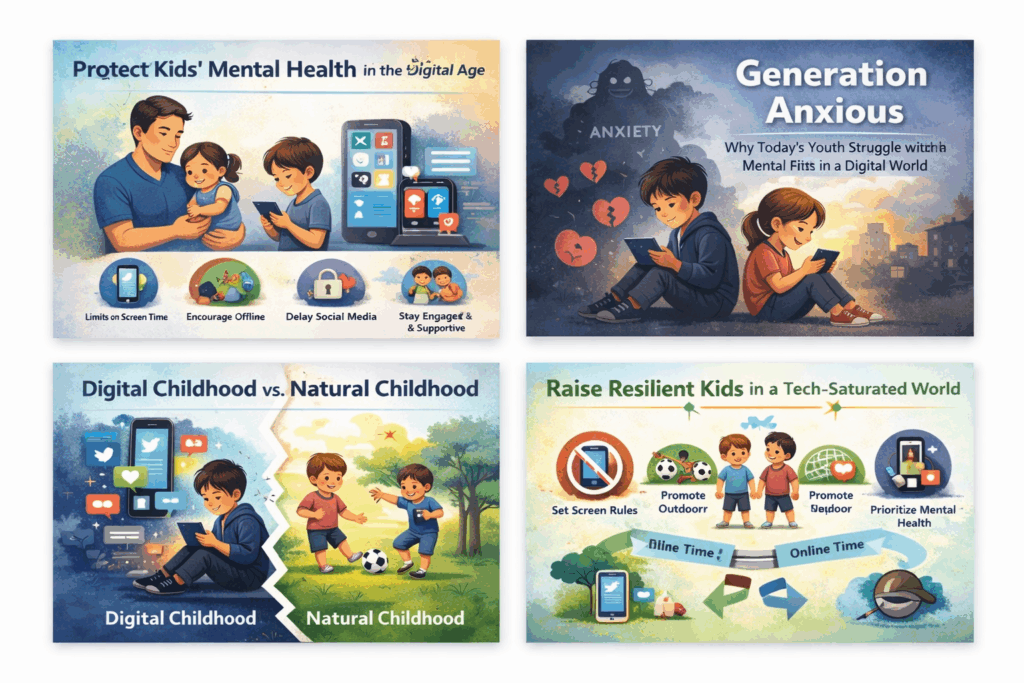
The good news is that Gen Z parents are uniquely equipped to tackle these challenges. After all, you grew up with the internet too (or at least witnessed its rise), so you understand the digital world better than any generation of parents before you. At NXG Thrive, we believe that with the right strategies, you can help your children enjoy the benefits of technology without sacrificing their wellbeing. Here are some actionable tips for parenting in the digital world, inspired by insights from The Anxious Generation and our own mission of preventative care:
- Encourage Offline Play and Exploration: Make sure your child has plenty of screen-free time to play, explore, and be bored. Unstructured play – whether it’s running around the yard, playing pretend, doing art, or riding bikes – is crucial for developing creativity, social skills, and resilience. It might feel scary to let kids roam or take risks (especially if you grew up being closely supervised), but those little adventures help them learn risk management and independence. Start small: maybe let your child play in a safe area without direct adult oversight, or try a “free-range” afternoon at the park. Building this independence and resilience early on will help them handle real-world challenges later. Remember, children are antifragile – they grow stronger from a few scrapes and failures (just as muscles grow stronger from use).
- Set Healthy Boundaries on Screen Time: Instead of giving in to the default “always on” culture, create family rules around devices and screen time for kids. For example, you might establish no-phone zones (like no devices during dinner, or in bedrooms at night) to protect quality time and sleep. Set a reasonable daily limit for recreational screen use, and use parental controls or screen-time management tools if needed. The goal isn’t to ban technology (which is unrealistic) but to teach balance. Explain to your kids why you’re setting limits – for instance, “Too much YouTube makes it hard to sleep and focus, so let’s keep it to 30 minutes.” Involving them in the process can reduce pushback and help them develop self-regulation skills.
- Delay and Supervise Digital Social Media: There’s a growing movement of parents choosing to wait until kids are older before giving them smartphones or social media accounts. Haidt notes that many parents feel pressured to hand over a phone because “everyone else does,” but if communities band together, we can change that norm. Consider holding off on full-feature smartphones until middle school or later. In the meantime, if your child needs a way to contact you, you could use a basic “dumb phone” or a smart watch with calling – something without social media or internet browsers. If your tween or teen is already online, keep an eye on their digital world. Friend them on their platforms (if appropriate), talk about what they’re seeing, and make sure they know they can come to you if something online makes them uncomfortable. This isn’t about spying – it’s about being a present parent in their digital life just as you are in their offline life.
- Model Good Tech Habits: As Gen Z parents, you’re tech-savvy and likely on your devices a lot too. Kids will follow what you do more than what you say. If you’re scrolling through Instagram at the dinner table, it sends a message that screens are more important than family time. Try to model the balance you want them to learn. For instance, keep your own phone away during family activities, show them how you prioritize hobbies or reading books over endless TV, and demonstrate polite phone etiquette (like not answering non-urgent texts while someone is talking to you). By seeing you unplug regularly, kids learn that screens are tools, not the center of life.
- Stay Involved and Curious: One of the best antidotes to “digital under-parenting” is to actively engage with your child about their online experiences. Talk openly about the apps, games, and websites they use. Ask them to show you their favorite game or the latest funny video they like – not only will you bond, you’ll also better understand the content they consume. When age-appropriate, discuss online safety and digital kindness. Make conversations about the internet a normal part of your family life, so if something troubling comes up (like cyberbullying or exposure to harmful content), your child feels comfortable telling you. Staying involved sends the message that you care about their digital world as much as their school or sports life, and that you’re there to guide them through it.
- Build a Support Network with Other Parents: It truly “takes a village” to raise kids in the digital age. No single parent can fix the culture of ubiquitous screens alone, but collective action makes a difference. Talk to other parents at your child’s school or in your community about shared guidelines – for example, agreeing not to allow smartphones at playdates, or joining the “Wait Until 8th” pledge (a commitment that parents won’t give children a smartphone until at least 8th grade). By coordinating with fellow parents, you reduce the “but all my friends have it!” pressure and create a more supportive environment for all the kids. Similarly, don’t hesitate to advocate for change in schools, like pushing for phone-free policies during class or more recess and outdoor programs. When parents band together, we can begin to shift the norms that currently trap us.
- Prioritize Family Mental Health: Amid all the focus on devices and rules, remember that family mental health support comes first. Make emotional check-ins a regular habit – ask your kids how they’re feeling, and really listen. Watch for signs of anxiety or depression (excessive irritability, withdrawal, changes in sleep or appetite) which might be related to online stress or something else. If you’re worried, reach out for help early – whether that’s talking to your pediatrician, a counselor, or accessing resources through organizations like NXG Thrive. There is no shame in seeking support. In fact, doing so models to your child that mental health is a priority and that reaching out is a sign of strength, not weakness.
By implementing these tips, you’re not just limiting negatives – you’re actively fostering a healthier, happier childhood in the digital world. Small changes, like a bit more outdoor play or a bit less TikTok before bed, can make a big difference over time. And remember, perfect balance is impossible (we’re all figuring this out together!). What matters is your intentional effort and the love and guidance you provide along the way.
Our Shared Mission: Supporting Families in a Digital World
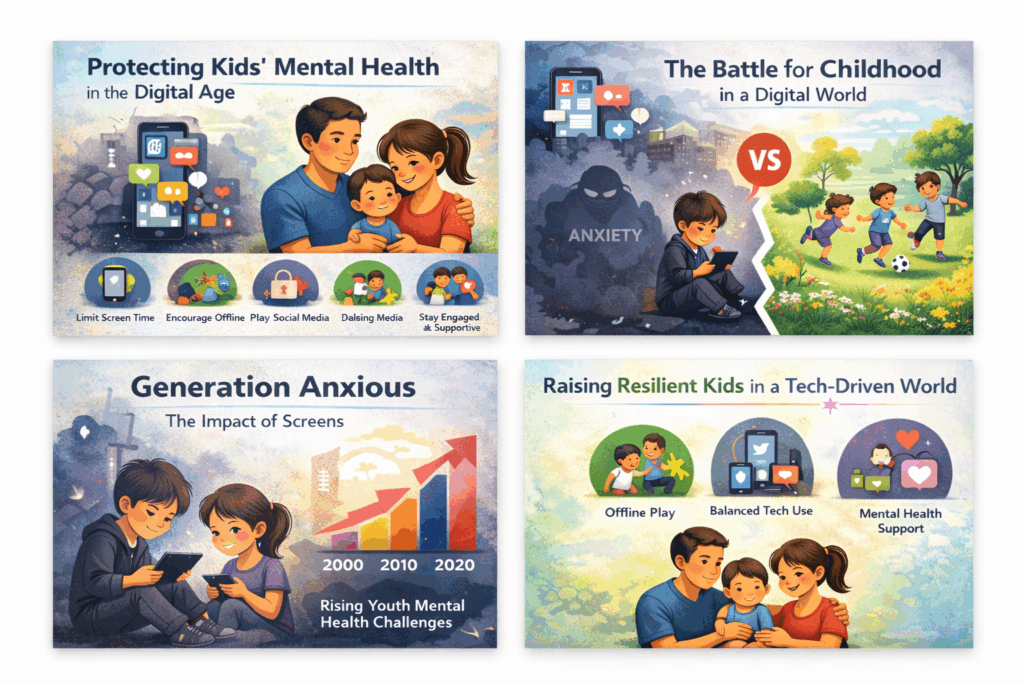
At NXG Thrive, we share the mission of building a more balanced, humane childhood for kids growing up today. The challenges highlighted in The Anxious Generation underscore why our work is so important. Gen Z parents like you are on the front lines of a new kind of parenting – one that didn’t come with a handbook from our own parents’ generation. But you’re not alone in this. Organizations like ours are here to support young people’s wellbeing and guide parents every step of the way. We believe that with preventative care, education, and community support, we can help families raise healthy, resilient children in the digital age.

If you’re looking for more guidance or feel overwhelmed, we invite you to explore NXG Thrive’s family-focused resources or contact our team for support. Whether you need tips on managing screen time, advice on nurturing mental health, or simply a community that gets it, NXG Thrive is here for you. Together, we can help the next generation thrive – both online and off.